How a snail is put together
One big foot, eyes on stalks, a ribbon of teeth and, in a slug, a shell hidden inside. Here’s what makes a gastropod a gastropod.
Molluscs, not insects
Snails and slugs are gastropods, a kind of mollusc. ‘Gastropod’ means ‘stomach foot’. The Wildlife Trusts: Yellow slug Gastropods glide along on a large foot, but it isn’t really their stomach: in snails, the stomach is tucked away inside the shell. Australian Museum: Snails and slugs
After arthropods (such as insects and spiders), molluscs are the second biggest group of animals on the planet. Natural History Museum, London: For the love of snails and slugs The mollusc family also includes clams, mussels, oysters, chitons, squid, octopuses and cuttlefish. Natural History Museum, London: For the love of snails and slugs
Molluscs are thought to have evolved over 500 million years ago. Natural History Museum, London: For the love of snails and slugs Gastropods are one of the few groups of animals that have done well in all three big habitats: the sea, fresh water and land. Britannica: Gastropod
Snail or slug?
A slug is a gastropod whose shell has shrunk to a small plate or a few grains inside its body, or has gone completely. Britannica: Slug A slug still has a shell, but it’s inside, under the thick ‘mantle’ on its back. Natural History Museum, London: For the love of snails and slugs
Slugs have lost their shells many times during evolution, so some slugs are more closely related to snails than to other slugs. Natural History Museum, London: For the love of snails and slugs Shells cost a lot to make: they need plenty of calcium and energy, they are heavy, and they get in the way underground. Natural History Museum, London: For the love of snails and slugs
Tentacles and eyes
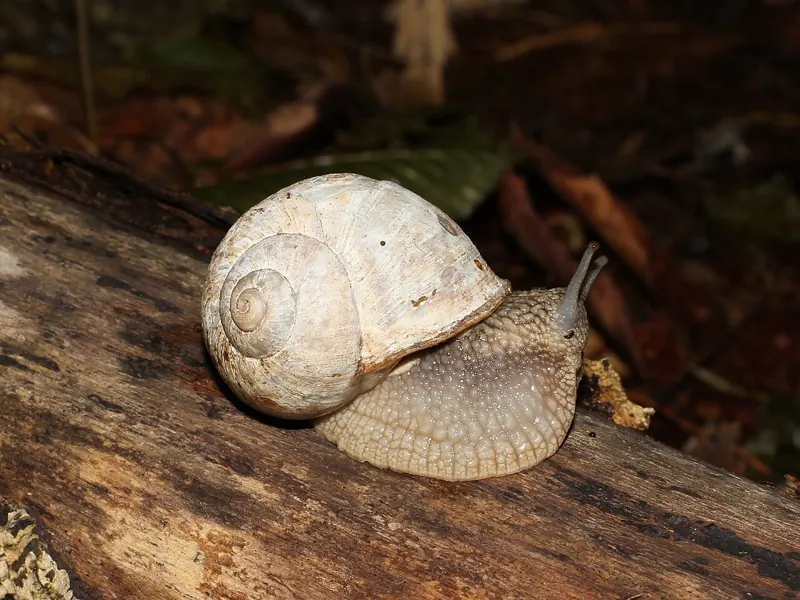
Snails and slugs usually have four tentacles that they can pull in, and the top two carry tiny eyes. Royal Horticultural Society: Slugs and snails Their eyesight is poor: they can only see differences in light and blurry outlines. Natural History Museum, London: For the love of snails and slugs
Snails have light-sensitive cells all over their bodies, so they pull back into their shells if a shadow falls on them. Natural History Museum, London: For the love of snails and slugs They find food by smelling and tasting chemicals, and can follow trails to it. Touch is one of the main ways they sense the world. Natural History Museum, London: For the love of snails and slugs
Snails and slugs can’t hear like we do, but they may sense vibrations with their bodies. Natural History Museum, London: For the love of snails and slugs
A tongue full of teeth
Snails and slugs eat with a radula, a tongue-like ribbon covered in tiny teeth that works like sandpaper. Natural History Museum, London: For the love of snails and slugs A slug has 2,000 to 8,000 tiny teeth on its radula, which it uses like a built-in cheese grater. Royal Horticultural Society: 10 fun facts about slugs (7 March 2024)
A few snails eat other snails, drilling through their shells with the radula. Natural History Museum, London: For the love of snails and slugs
Blue blood and a hole on the right
Slug blood is pale blue or grey. Slugs use copper, not iron, to carry oxygen. Royal Horticultural Society: 10 fun facts about slugs (7 March 2024) A slug’s breathing hole and most of its organs are on the right side of its body, because slugs evolved from coiled snails. Royal Horticultural Society: 10 fun facts about slugs (7 March 2024)
Most slugs breathe, and poo, through the same hole on the right side of the mantle, the saddle near the head. Royal Horticultural Society: 10 fun facts about slugs (7 March 2024) Land snails and slugs breathe air with a ‘lung’, a cavity that also stores water. Britannica: Gastropod
Doors and seals
Many sea and freshwater snails close their shell with a hard ‘door’ called an operculum. Land snails and slugs don’t have one. Britannica: Gastropod
In dry weather a garden snail can stick itself to a surface or close its shell with a papery seal called an epiphragm. Dekle & Fasulo, Brown garden snail, University of Florida IFAS Featured Creatures (EENY240)
On the move
A snail moves on its foot, a muscle that ripples in waves to push it forward over a trail of slime. Britannica: How fast are snails? Most snails in the group that includes many land, sea and freshwater snails move at less than 8 cm a minute. Britannica: How fast are snails?
The fastest slug is the tramp slug, recorded at 17.6 metres an hour (29.4 cm a minute). Royal Horticultural Society: 10 fun facts about slugs (7 March 2024) · checked 30 Oct 2026
Big and small
Some forest-litter snails are less than 1 mm across, and about 90% of adult snails are less than an inch (2.5 cm) long. Britannica: Gastropod The largest land snail, the African Achatina achatina, has a shell almost 20 cm long. Britannica: Gastropod
The ash-black slug is the UK’s biggest slug: it has been known to reach 30 cm long. Royal Horticultural Society: 10 fun facts about slugs (7 March 2024) · checked 30 Oct 2026
Tough places to live
Some glass snails (Vitrina) crawl about on snowbanks in Alpine meadows. Britannica: Gastropod Some land snails live above the snow line, and some desert snails stay inactive for years between rains. Britannica: Gastropod
Next: slime →