22 snails and slugs worth meeting
From the garden snail to a pure white slug that lives underground, here are 22 kinds.
A small garden can be home to well over a dozen kinds of slug and snail. Natural History Museum, London: Slime Search (with the Conchological Society) Banded snails can be yellow, pink or brown, with different numbers of bands or none at all. They eat decaying plants. Natural History Museum, London: For the love of snails and slugs
- The Natural History Museum says the UK has 100 species of land snail and 46 species of land slug. Natural History Museum, London: For the love of snails and slugs · checked 30 Oct 2026
- The RHS says there are over 44 species of slug and 90 species of snail in the UK. Royal Horticultural Society: Slugs and snails · checked 30 Oct 2026
- The Wildlife Trusts say there are around 150 species of slugs and snails in the UK. The Wildlife Trusts, 14 March 2024: The Wildlife Trusts and RHS ask gardeners to make friends with molluscs · checked 30 Oct 2026
Three trusted sources, three different figures. The sources don’t explain the difference, so we show all three. Every disagreement we found →
Counts and records can change; those facts carry the date we checked them (30 Oct 2026).
Snails
Gastropods with a coiled shell they can pull back into.
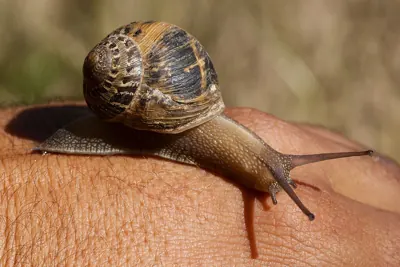 No. 01Garden snailCornu aspersum
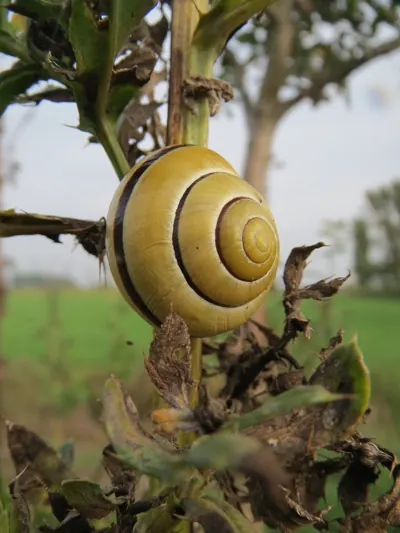 No. 02Brown-lipped snailCepaea nemoralis
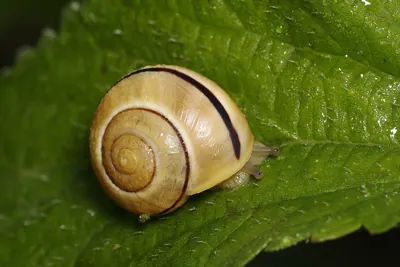 No. 03White-lipped snailCepaea hortensis
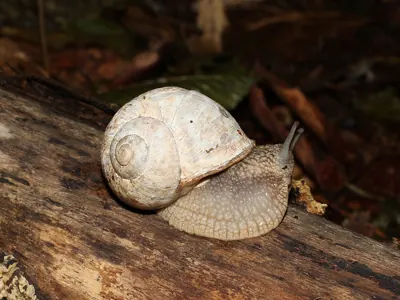 No. 04Roman snailHelix pomatiaNo. 05Turkish escargotHelix lucorum
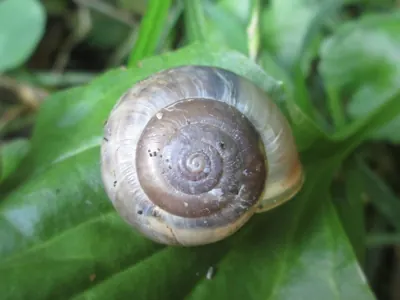 No. 06Kentish snailMonacha cantianaNo. 07Girdled snailHygromia cinctellaNo. 08Two-toothed door snailClausilia bidentataNo. 09Giant African land snailAchatina achatina
Slugs
Gastropods whose shell has shrunk to a small plate or grains inside, or gone.
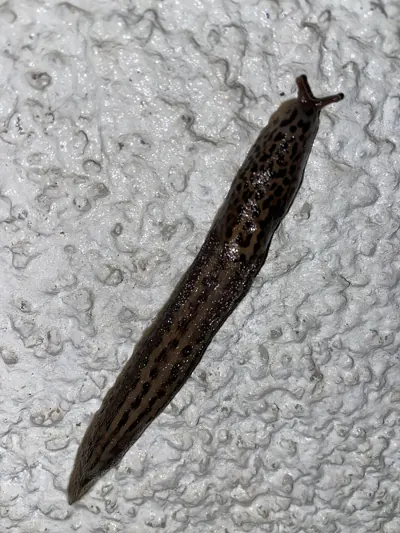 No. 10Leopard slugLimax maximus
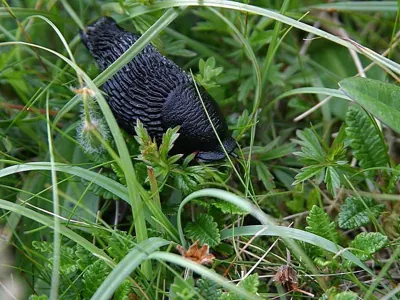 No. 11Large black slugArion aterNo. 12Yellow slugLimacus flavus
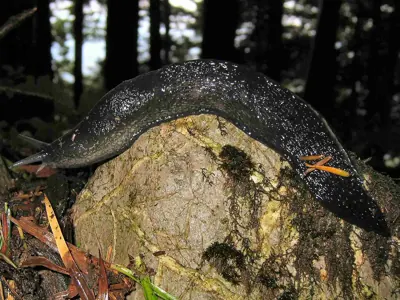 No. 13Ash-black slugLimax cinereonigerNo. 14Grey field slugDeroceras reticulatumNo. 15Tramp slugDeroceras invadensNo. 16Green cellar slugLimacus maculatusNo. 17Shelled slugTestacella (genus)No. 18Ghost slugSelenochlamys ysbrydaNo. 19Lemon slugMalacolimax tenellusNo. 20Tree slugLehmannia marginataNo. 21Worm slugBoettgerilla pallensNo. 22Budapest keeled slugTandonia budapestensis
No. 01 · Cornu aspersum
Garden snail
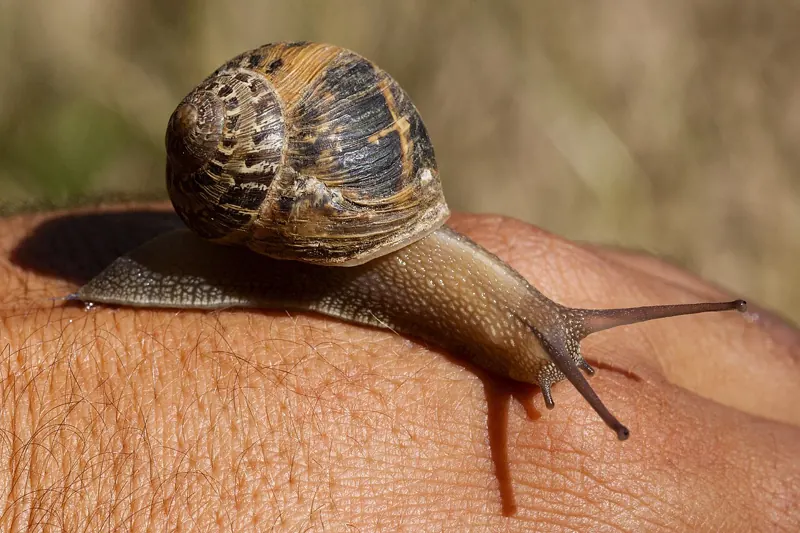
- The common garden snail is found all over the UK. It mostly comes out at night, or when it rains. Natural History Museum, London: For the love of snails and slugs
- Its shell is 25 to 35 mm tall, usually pale brown with up to five dark spiral bands, and has a thick white lip. Conchological Society of Great Britain and Ireland: Identifying common British snails, Garden snail
- Its scientific name is Cornu aspersum. It used to be called Helix aspersa. Conchological Society of Great Britain and Ireland: Identifying common British snails, Garden snail
No. 02 · Cepaea nemoralis
Brown-lipped snail
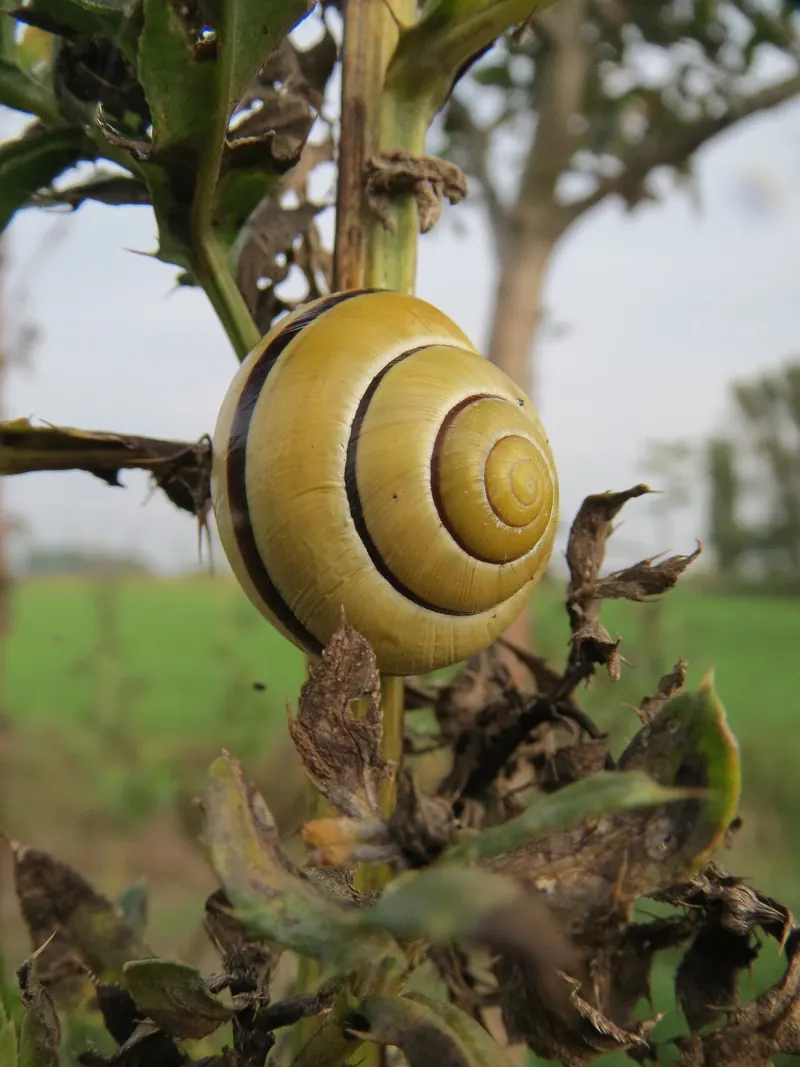
- The brown-lipped snail has a dark brown band round the opening of its shell, and up to five brown bands on the shell. The Wildlife Trusts: Brown-lipped snail
- Its shell can be yellow, pink, brown or red. This variety is thought to help camouflage it. The Wildlife Trusts: Brown-lipped snail
- Brown-lipped snails are 2.0 to 2.4 cm across. The Wildlife Trusts: Brown-lipped snail
- Song thrushes break open brown-lipped snails by banging them on a stone ‘anvil’. The Wildlife Trusts: Brown-lipped snail
No. 03 · Cepaea hortensis
White-lipped snail
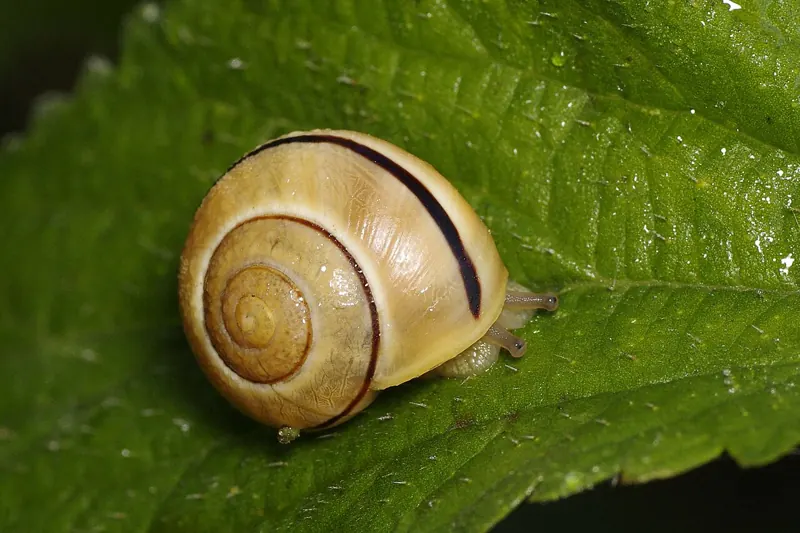
- The white-lipped snail looks like the brown-lipped snail, but is usually smaller and has a white lip round its shell opening. The Wildlife Trusts: White-lipped snail
- It likes to eat nettles, ragwort and hogweed. The Wildlife Trusts: White-lipped snail
- White-lipped snails are 1.6 to 2.2 cm across. The Wildlife Trusts: White-lipped snail
No. 04 · Helix pomatia
Roman snail
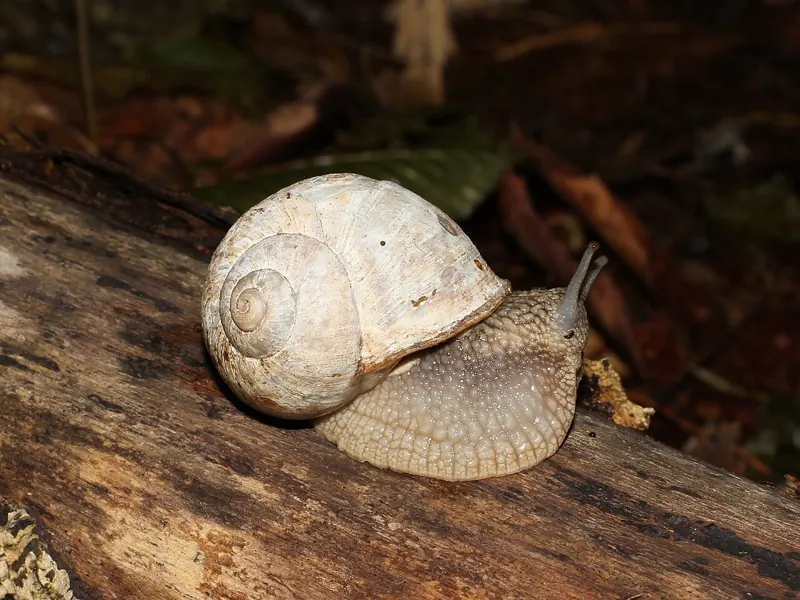
- The Roman snail can grow as big as 5 cm and lives in forests and shrubland. Natural History Museum, London: For the love of snails and slugs
- Roman snails were probably brought to Britain in Roman times, 2,000 years ago, and are found on chalk soils in southern England. Natural History Museum, London: Slime Search (with the Conchological Society)
- In England, Roman snails are protected by law: it is illegal to kill, injure, collect or sell them. Natural History Museum, London: For the love of snails and slugs
- If you spot a Roman snail, don’t move or disturb it. Natural History Museum, London: Slime Search (with the Conchological Society)
No. 05 · Helix lucorum
Turkish escargot
No photo yet: we only use public domain or CC0 photos, and we haven’t picked one for this species.
- The Turkish escargot has a huge, almost round, rich brown striped shell up to 45 mm wide. It arrived from Europe in the last 50 years. Natural History Museum, London: Slime Search (with the Conchological Society) · checked 30 Oct 2026
No. 06 · Monacha cantiana
Kentish snail
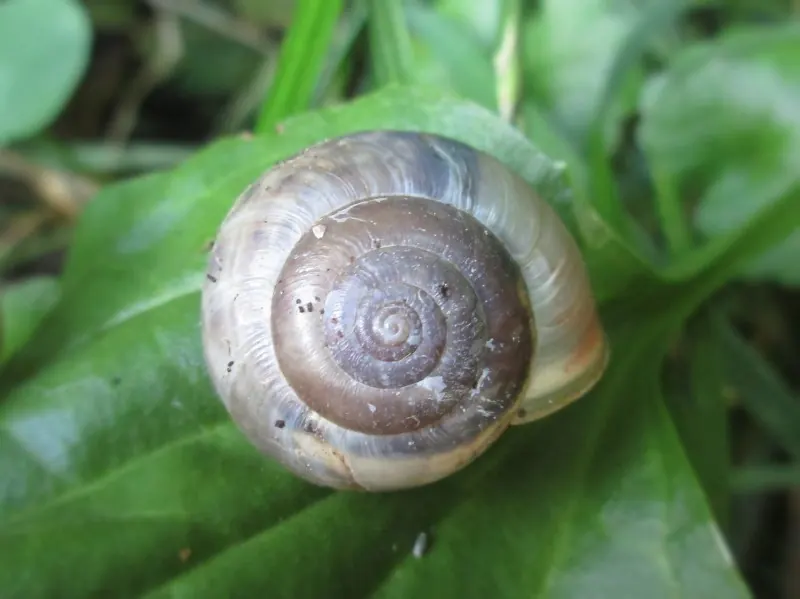
- The Kentish snail is up to 15 mm wide, usually white or see-through, with a red-brown tinge round the opening. It likes road verges and waste ground. Natural History Museum, London: Slime Search (with the Conchological Society)
- It comes from the Mediterranean, is common in the south-east, and is spreading north and west. Natural History Museum, London: Slime Search (with the Conchological Society)
No. 07 · Hygromia cinctella
Girdled snail
No photo yet: we only use public domain or CC0 photos, and we haven’t picked one for this species.
- The girdled snail is 10 mm wide with a sharp, pale ridge round the edge of its shell. It has spread fast across British towns this century. Natural History Museum, London: Slime Search (with the Conchological Society)
No. 08 · Clausilia bidentata
Two-toothed door snail
No photo yet: we only use public domain or CC0 photos, and we haven’t picked one for this species.
- The two-toothed door snail is slender, brown or grey and only 10 mm long. It climbs trees and walls to eat lichens and algae. Natural History Museum, London: Slime Search (with the Conchological Society)
No. 09 · Achatina achatina
Giant African land snail
No photo yet: we only use public domain or CC0 photos, and we haven’t picked one for this species.
- The largest land snail, the African Achatina achatina, has a shell almost 20 cm long. Britannica: Gastropod
- Large tropical land snails such as Achatina are very slow movers. Britannica: How fast are snails?
No. 10 · Limax maximus
Leopard slug
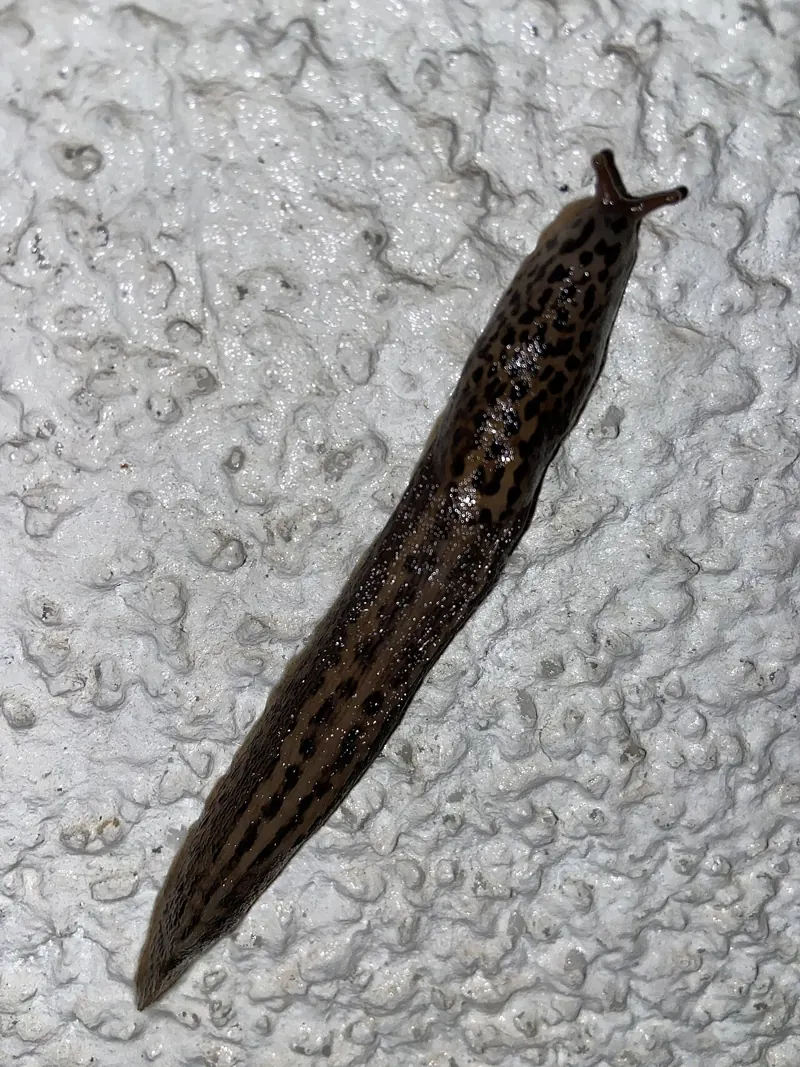
- The leopard slug is named after the dark spots on its light brown body. Australian Museum: Leopard slug
- Leopard slugs are highly territorial and scare off other slugs: a ‘guard slug’! Royal Horticultural Society: Who’s who in slugs
- Leopard slugs eat fungi, lichens and dead plants, and are also reported to eat other live slugs. Royal Horticultural Society: 10 fun facts about slugs (7 March 2024)
- Leopard slugs pair up hanging from a branch on a rope of slime, then climb back up, eating the rope as they go. Australian Museum: Leopard slug
No. 11 · Arion ater
Large black slug
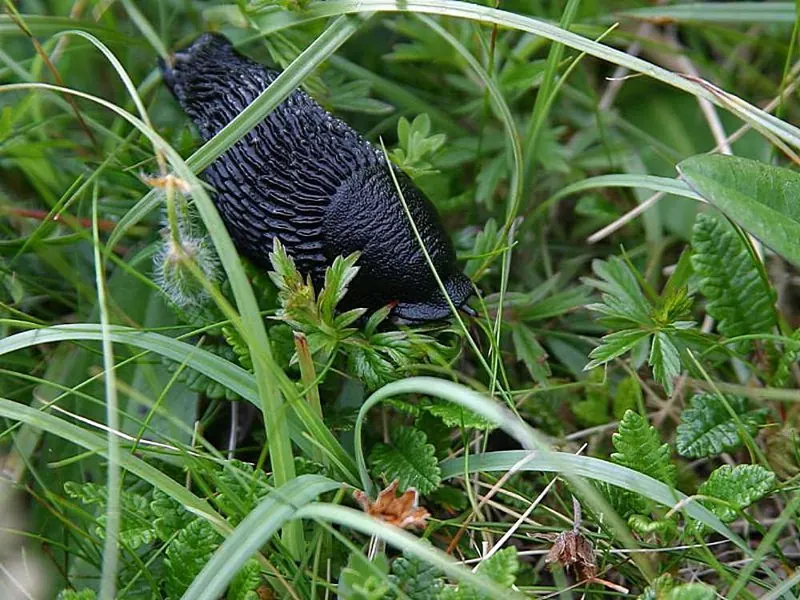
- The large black slug can be any colour from yellow to black. When disturbed, it shrinks into a hump and rocks from side to side. Royal Horticultural Society: Who’s who in slugs
No. 12 · Limacus flavus
Yellow slug
No photo yet: we only use public domain or CC0 photos, and we haven’t picked one for this species.
- The yellow slug has a yellow-and-grey mottled body and blue tentacles. It grows up to 10 cm long. The Wildlife Trusts: Yellow slug
- The yellow slug lives close to people, in gardens and in damp, dark corners of houses. It eats fungi, rotting matter and vegetables. The Wildlife Trusts: Yellow slug
No. 13 · Limax cinereoniger
Ash-black slug
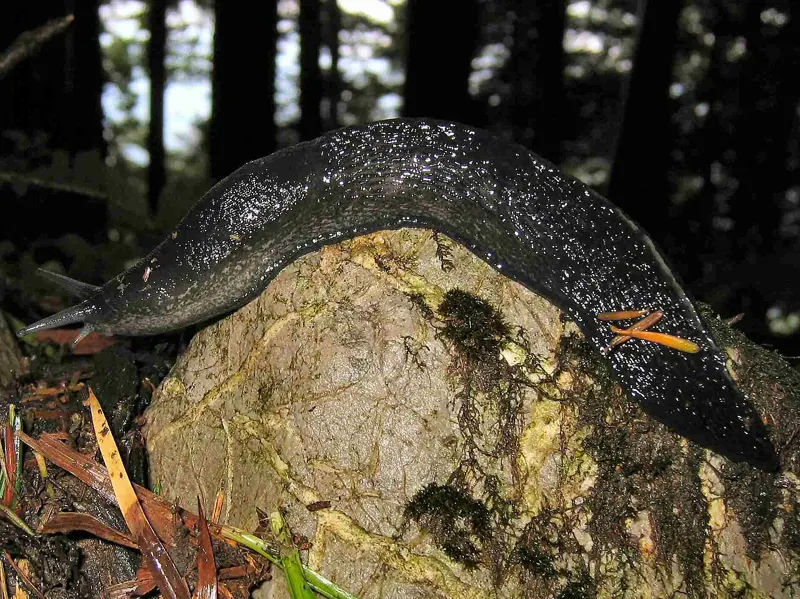
- The ash-black slug is the UK’s biggest slug: it has been known to reach 30 cm long. Royal Horticultural Society: 10 fun facts about slugs (7 March 2024) · checked 30 Oct 2026
- The ash-black slug lives in woods and can be a sign of ancient woodland. Royal Horticultural Society: Who’s who in slugs
No. 14 · Deroceras reticulatum
Grey field slug
No photo yet: we only use public domain or CC0 photos, and we haven’t picked one for this species.
- The grey field slug is small, usually pale buff with dark flecks and a dark net pattern. Royal Horticultural Society: Who’s who in slugs
No. 15 · Deroceras invadens
Tramp slug
No photo yet: we only use public domain or CC0 photos, and we haven’t picked one for this species.
- The tramp slug has a paler ring round its breathing hole and tiny black flecks on a brownish body. Royal Horticultural Society: Who’s who in slugs
- The fastest slug is the tramp slug, recorded at 17.6 metres an hour (29.4 cm a minute). Royal Horticultural Society: 10 fun facts about slugs (7 March 2024) · checked 30 Oct 2026
No. 16 · Limacus maculatus
Green cellar slug
No photo yet: we only use public domain or CC0 photos, and we haven’t picked one for this species.
- The green cellar slug is a plump, medium to large slug mottled with greenish blotches. Royal Horticultural Society: Who’s who in slugs
- Cellar slugs graze on algae, fungi and rotting bits, and don’t harm gardens. Royal Horticultural Society: 10 fun facts about slugs (7 March 2024)
No. 17 · Testacella (genus)
Shelled slug
No photo yet: we only use public domain or CC0 photos, and we haven’t picked one for this species.
- The shelled slug Testacella has a small flat shell near its tail, lives almost entirely underground and eats worms. Royal Horticultural Society: Who’s who in slugs
- Natural History Museum scientists found a rare shelled slug under a concrete slab in the museum’s own gardens. Natural History Museum, London: For the love of snails and slugs
No. 18 · Selenochlamys ysbryda
Ghost slug
No photo yet: we only use public domain or CC0 photos, and we haven’t picked one for this species.
- The ghost slug is pure white, almost blind, lives underground and eats earthworms ‘like spaghetti’. Natural History Museum, London: For the love of snails and slugs
- It was found in Wales in 2008, and its name ysbryda is Welsh for ‘ghost’: the first scientific name based on the Welsh language. Royal Horticultural Society: 10 fun facts about slugs (7 March 2024)
- The ghost slug was new to science when it was found, but it originally comes from Crimea. Natural History Museum, London: Slime Search (with the Conchological Society)
No. 19 · Malacolimax tenellus
Lemon slug
No photo yet: we only use public domain or CC0 photos, and we haven’t picked one for this species.
- The lemon slug lives only in long-established woodland and eats fungi. Adults come to the surface when the fungi are fruiting. Royal Horticultural Society: 10 fun facts about slugs (7 March 2024)
No. 20 · Lehmannia marginata
Tree slug
No photo yet: we only use public domain or CC0 photos, and we haven’t picked one for this species.
- The tree slug feeds on algae and lichen high up in trees: it climbs up in the evening and comes down in the morning looking shrivelled. Royal Horticultural Society: Who’s who in slugs
No. 21 · Boettgerilla pallens
Worm slug
No photo yet: we only use public domain or CC0 photos, and we haven’t picked one for this species.
- The worm slug is very slender and lives underground. It was first found in Britain in 1972 and is now widespread. Natural History Museum, London: Slime Search (with the Conchological Society)
No. 22 · Tandonia budapestensis
Budapest keeled slug
No photo yet: we only use public domain or CC0 photos, and we haven’t picked one for this species.
- The Budapest keeled slug is 5 to 7 cm long, grey to brown, with an orange ridge along its back. It is common in gardens. Natural History Museum, London: Slime Search (with the Conchological Society)
- When it rests, the Budapest keeled slug curls into a C shape. Conchological Society of Great Britain and Ireland: Tandonia budapestensis
- Keeled slugs stay mostly underground and sometimes tunnel into potatoes. Royal Horticultural Society: Slugs and snails
One more garden snail fact
Garden snails are widespread in cities around the world. In Australia, introduced snails like this have two pairs of tentacles, while the native snails and slugs have one pair. Australian Museum: Garden snail