How to find snails and slugs
A wet evening, a torch and somewhere damp to look. Here’s what the experts suggest.
When to look
Snails and slugs need to stay wet, so you are most likely to see them when it’s raining. Natural History Museum, London: For the love of snails and slugs Slugs and snails are most active at night, so an evening walk with a torch is a good way to find them. The Wildlife Trusts, 14 March 2024: The Wildlife Trusts and RHS ask gardeners to make friends with molluscs
Slugs feed at night, so holes and slime trails are often the only clues. Royal Horticultural Society: Slugs and snails
Where to look
Look under stones, slabs and pieces of wood. In mild weather and at night they often climb bushes, tree trunks and walls. Natural History Museum, London: Slime Search (with the Conchological Society) Many snails are smaller than people expect, so get down close to the ground to look. Natural History Museum, London: Slime Search (with the Conchological Society)
Empty shells can be a clue that living snails are nearby. Natural History Museum, London: Slime Search (with the Conchological Society) A small garden can be home to well over a dozen kinds of slug and snail. Natural History Museum, London: Slime Search (with the Conchological Society)
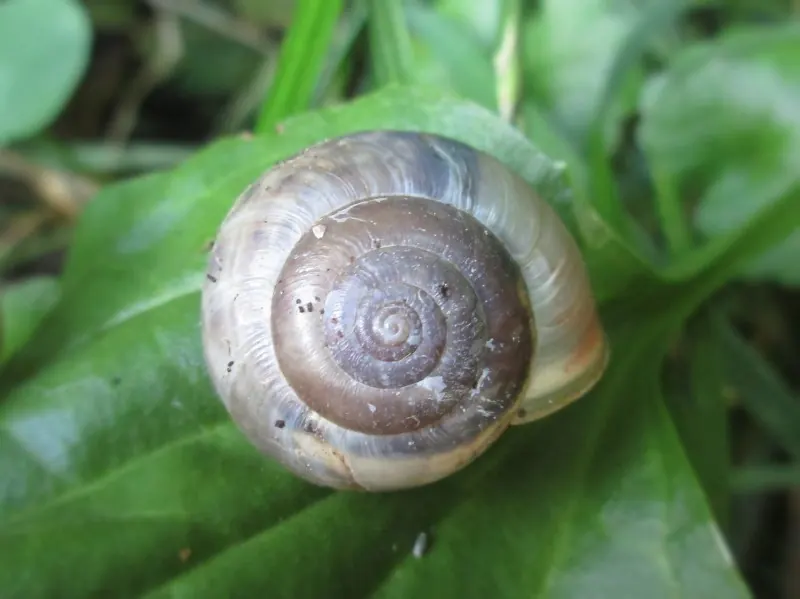
Naming what you find
Slugs are hard to name: experts look at the breathing hole, the mantle and even the colour of the sole and slime. Royal Horticultural Society: Who’s who in slugs To help name a slug, scientists like three photos: from above, from the right side and of the underside of the foot. Natural History Museum, London: Slime Search (with the Conchological Society)
If you spot a Roman snail, don’t move or disturb it. Natural History Museum, London: Slime Search (with the Conchological Society)
Recording
The Conchological Society of Great Britain and Ireland has run the national recording schemes for molluscs since 1876. Natural History Museum, London: Slime Search (with the Conchological Society) Some native species are getting rarer because of towns spreading and pollution, while some newcomers are spreading quickly. Natural History Museum, London: Slime Search (with the Conchological Society)
The Conchological Society of Great Britain and Ireland runs the national recording schemes for molluscs. On the Isle of Man, Manx Wildlife Trust collects wildlife records.
Next: the species →